CN
CN
What is the function of non-standard bearings for agricultural machinery
seo:http://en.xcwlbearing.com/news1080792.html date:2025/11/14 13:36:00
Non standard bearings for agricultural machinery are customized bearings designed for special working conditions of agricultural machinery. Their core functions are reflected in adapting to complex environments, improving equipment performance, reducing maintenance costs, and optimizing structural design. The specific analysis is as follows:
1. Adapting to complex working conditions
Heavy loads and impact loads: Agricultural machinery such as tractors and harvesters need to withstand high impact forces during operation (such as plow shafts during plowing and threshing drums during harvesting). Non standard bearings enhance their load-bearing capacity by increasing the roller diameter, optimizing the raceway curvature, or adopting a fully loaded roller structure. For example, the plow shaft bearing of the deep loosening machine needs to withstand an impact load of ≥ 50kN, and non-standard design can ensure its stable operation. Corrosion resistance and dust prevention: Agricultural environments are prone to mud, water, and pesticides. Non standard bearings are made of special materials (such as 316L stainless steel) or multi-layer sealing structures (such as labyrinth and contact seals) to prevent corrosion and debris intrusion. For example, the bearings of a rice harvester require long-term contact with mud and water, and non-standard design can extend their service life to 2-3 times that of standard bearings.
Temperature and impact resistance: Non standard bearings use high-temperature grease (operating temperature range -40 ℃~150 ℃) and heat-resistant retainer materials (such as PA66+GF30) to ensure normal operation in high temperature environments in summer (≥ 40 ℃) or low temperature environments in winter (≤ -20 ℃).
. At the same time, increasing the number of rolling elements or adopting double row tapered roller bearings can improve the impact resistance and adapt to the bumps and vibrations in agricultural machinery operations.2. Improving equipment performance and reliability
High precision and stability: Non standard bearings improve operational accuracy and stability by optimizing the raceway shape, using high-precision retainers, or integrating sensors (such as temperature and vibration sensors).
. For example, the overheating warning system for the threshing drum bearings of a combine harvester can monitor the operating status in real time and prevent malfunctions.Long life and low failure rate: Non standard bearings use high-strength materials (such as GCr15SiMn or carburizing steel 20CrMnTi) and surface strengthening techniques (such as laser cladding cobalt based alloy layer, ceramic coating) to reduce wear and fatigue and extend service life.
. For example, the bearings of a grain dryer require long-term trouble free operation, and non-standard design can meet their needs.Dynamic load enhancement: By optimizing the roller shape and increasing the strength of the cage, the basic rated dynamic load (C) of non-standard bearings is increased by 40% -60% compared to standard bearings, making them suitable for heavy-duty operations in agricultural machinery.
. For example, the bearings of the seeder and planter need to withstand high loads in a static state, and non-standard design can optimize their basic rated static load (C ₀).III. Reduce maintenance costs and frequency
Maintenance free design: Non standard bearings use self-lubricating materials (such as MoS ₂ solid lubricants) and long-lasting lubricating grease (such as lithium based composite grease) to reduce lubrication requirements.
. For example, the motor bearings of crop protection drones can maintain low friction operation in oil deficient or dusty environments, reducing maintenance frequency. Self cleaning function: Some non-standard bearings are designed with self-cleaning structures, such as detachable dust covers, which are easy to clean and replace. For example, the bearing of the chopper shaft can be cleaned of debris by removing the dust cover after operation, reducing wear. Fast response and flexible production: Non standard bearings adopt modular design, decomposing the bearings into modules such as rings, rolling elements, and cages. By combining different modules, products can be quickly customized, shortening the delivery cycle to 7-15 days (traditional non-standard bearings require 30-45 days) and reducing downtime losses.Fourth, optimize mechanical structure and space utilization
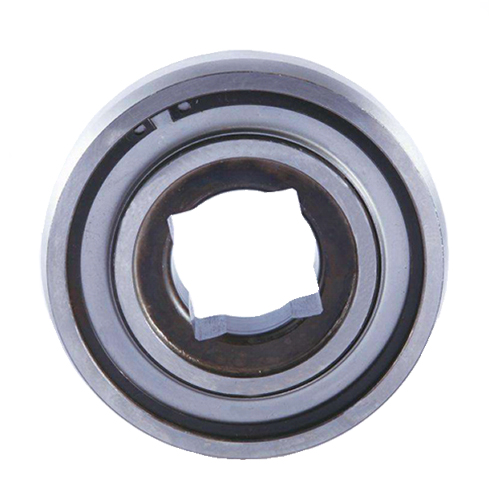
Irregular design: In response to the space limitations of agricultural machinery components (such as rotary tiller blade shaft, harvester cutting table transmission shaft), non-standard bearings can be customized with asymmetric structures, elongated inner/outer rings, or special flange shapes to ensure tight installation.
. For example, the bearings of the planting mechanism of a certain type of rice transplanter need to be designed with ultra-thin cross-sections (width ≤ 15mm) to adapt to compact spaces while ensuring stability at high speeds (≥ 2000rpm).Integrated function: Non standard bearings can be integrated with lubrication channels or sensor structures, reducing the number of parts in the entire machine, enhancing usage time, and reducing maintenance requirements.
. For example, some high-end non-standard bearings are equipped with temperature or vibration sensors to monitor the operating status in real time and prevent malfunctions.
 Phone:
 Address:No. 100, Nanmenwai, Nanming Street, Xinchang County, Shaoxing City, Zhejiang Province